You’ll know the route before we set off. Sometimes the weather leads the captain to choose a different cove. That is a natural part of boat trips, and managed well it does not spoil your holiday. This post explains the typical wind in the area, how the decision is made, how we pass a change on to you and whether it has any effect on your price.
Typical wind in the area
On the Aegean and Mediterranean coasts, the morning is usually calm. Later in the day you can often feel the wind pick up. That is why we mostly build the day's anchoring and swimming plan around the morning hours.
The direction and strength of the wind vary from area to area and from month to month; the captain follows the current picture and sets the route accordingly. We do not give a single table here, because putting the conditions of a given week down in writing in advance would not be right.
The difference between a sheltered bay and an open stretch
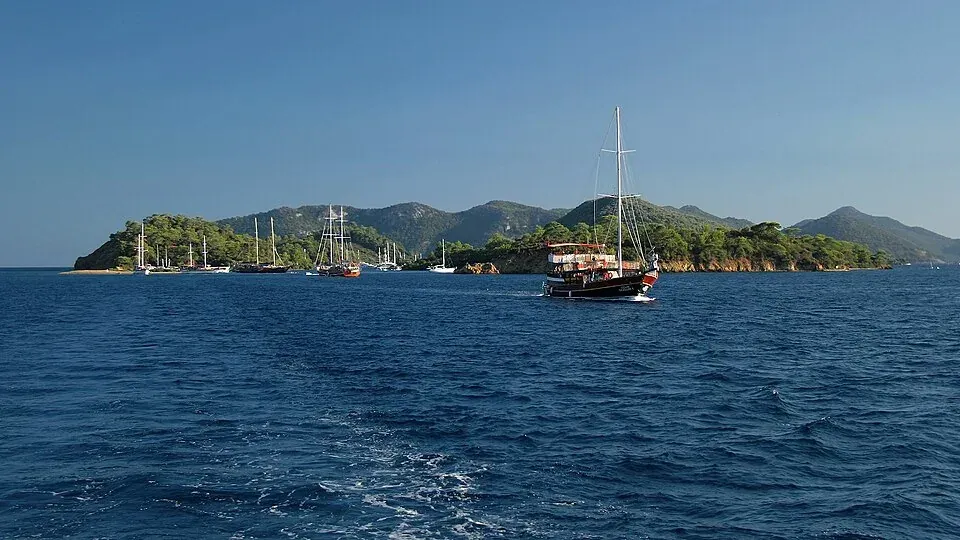
In sheltered bays like Göcek the wind blows more moderately than out at sea and the coves are close together. Moving from one cove to another takes little time; if the weather turns, a nearby alternative is easy to find. We described how a day in Göcek goes in June in a separate post.
On more open stretches, towards Kaş – Kekova for example, the passages are longer. On routes like that the captain sets the day's plan early in the morning and changes the order if he needs to.
Daily cruising time
Daily cruising time depends on the route, the boat and the weather. On cabin cruises the route and the daily programme are fixed; they are set out day by day on the departure's own page. On private charter we draw the route together with you, and it can still be changed during the trip.
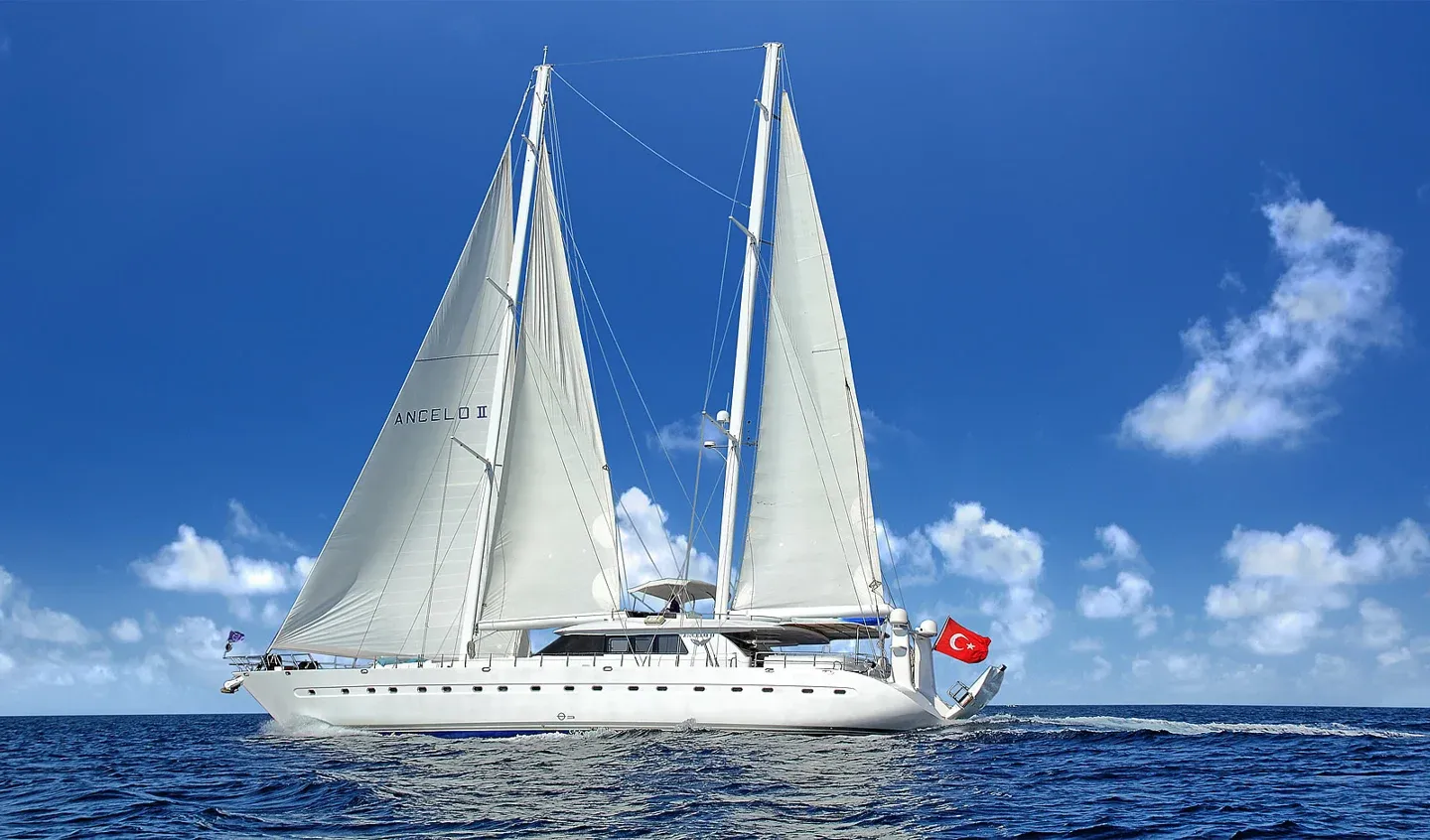
The type of boat also affects the time. Gulets generally run at a cruising speed of 9 to 10 knots; motor yachts go faster. The same distance takes a different amount of time depending on the boat. So the answer to "how many coves will we see" depends not on the route alone, but on the route and the boat being put together.
How the captain's decision takes shape
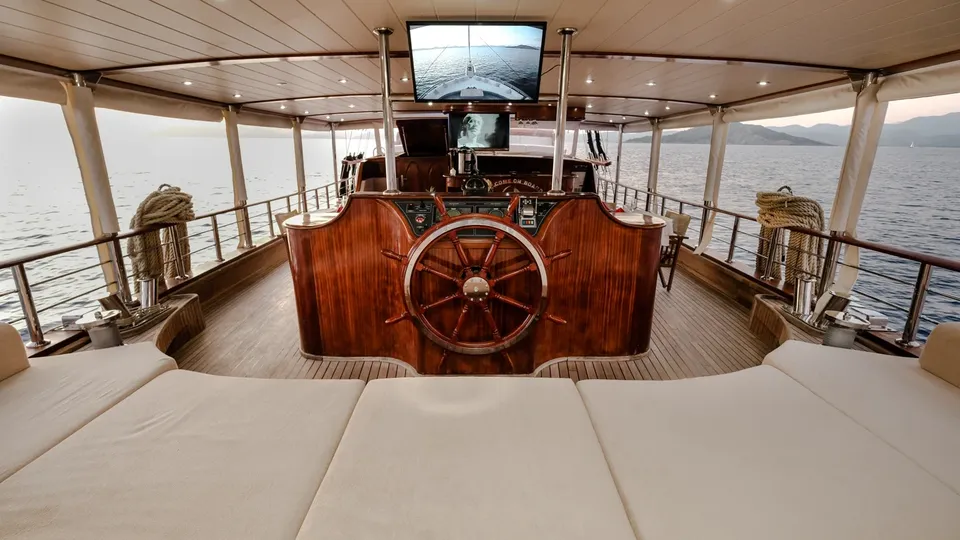
The captain decides by weighing up the current forecast, the state of the sea and the conditions in the coves along the route that day. That decision can change later in the day; forecasts can vary even over a short horizon.
The captain's priority is always safety, which is why he sometimes chooses a more sheltered cove over a more comfortable one. A cove looking good does not mean it is suitable for anchoring that day.
There are three main things that shape the decision:
- The direction and strength of the wind. A cove sheltered from one direction is open from another.
- The swell and the state of the sea. The comfort and the safety of a passage depend on it.
- The condition of the cove that day. The anchorage may be full, or conditions may not be suitable.
How we tell you about a change of route
If the weather and sea conditions are not suitable, the captain may change the route on safety grounds. He explains the change to you on board and you go through the new plan for the day together.
Where we can, we let you know in advance. If the weather turns suddenly, the captain explains it to you on board the same day; you talk through the reason and the alternative he suggests.
On private charter the route is flexible anyway; a change there is a natural part of the trip. On cabin cruises the route is fixed, but if the weather makes a change necessary the captain explains it to you in just the same way. The daily programme for each departure is set out on the cabin cruise page.
Does the price or the scope change
A change of route because of the weather does not affect your price or the services included in it. The scope stays the same; the only thing that changes is which cove you stop in.
| Situation | What changes | Price and scope |
|---|---|---|
| Change of cove because of weather | The order of stops | Unchanged |
| Waiting in port because of weather | The day's plan | Unchanged |
| A stop at a private marina you’ve chosen | The stop and the service | An extra charge may apply; we tell you in writing beforehand |
| A detour you’d like to make | The route | If there is a difference, we tell you in writing beforehand |
If you’d like to change the plan and it costs extra, we’ll give you the price in writing and wait for your go-ahead.
A change because of weather is not a cancellation
The captain changing the route, waiting in port or limiting the passage because of weather or sea conditions does not count as a cancellation and does not give rise to a refund. The boat stays at your disposal throughout; the crew, the meals and the accommodation carry on as before.
We write this rule down from the start so that your expectations are clear. You will find the full text on the cancellation and refund terms page.
Force majeure is a separate heading
Situations that make the trip impossible altogether, such as a natural disaster, war, an epidemic or a ban by the authorities, are treated separately. In a case like that the amount you have paid is transferred to a new date or refunded, without the deductions in the cancellation bands.
A windy day and force majeure are not the same thing. The first is dealt with within the trip; the second is the trip not taking place.
Night passages depend on the boat and the trip
Night passages depend on the route and the trip. On weekly trips you spend the last night on board at anchor and disembark the next morning after breakfast; that is why we keep the boarding and disembarkation times fixed.
If your route calls for a night passage, your captain explains it to you beforehand. You will find the hour-by-hour shape of the day on a day on board.
Your preferences
If you have preferences about the route (wanting to see a particular cove, for instance), it is enough to share them with the captain. If the weather allows we usually meet those preferences; when it does not, the captain suggests an alternative cove.
We build the route weighing the captain's experience and your preferences together. Telling us your preferences at the start of the week lets the captain build the plan around them.
Things worth telling us at the enquiry stage
If you write down what you expect from the route before booking, we can suggest the right boat and the right stretch:
- Do you want plenty of cruising, or plenty of time at anchor?
- Is there anyone in your group who gets seasick?
- Do you want to see a particular cove or place?
- How much does quiet at night matter to you?
- Busy marinas, or calm coves?
The answers to these questions change both our route suggestion and our boat suggestion directly. You can see all the stretches in the area on the routes page.
Areas and typical stretches
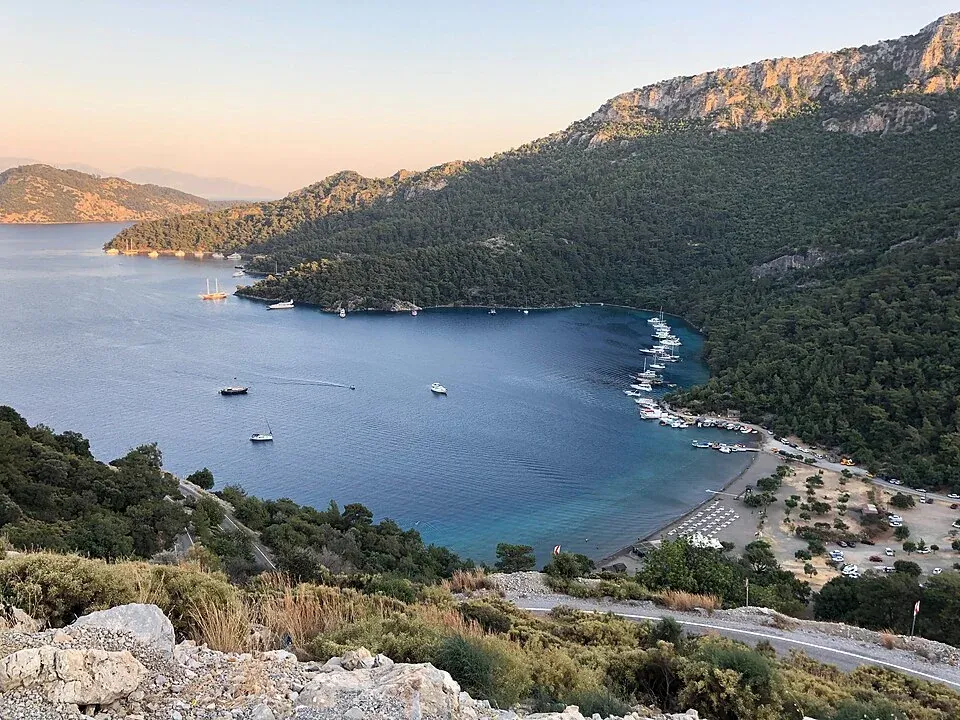
What you expect from the route determines which area you set off from:
| Area | Typical stops along the stretch |
|---|---|
| Göcek | Göcek, Yassıca, Tersane, Domuz, Fethiye, Hisarönü |
| Fethiye | Fethiye, across from Ölüdeniz, Gemiler, the mouth of Göcek |
| Kaş | Kaş, Kekova, Üçağız, Kalkan |
| Bodrum | Bodrum, Orak, Çökertme, Gökova |
| Marmaris | Marmaris, Bozburun, Hisarönü, Datça |
On stretches that stay inside a sheltered bay the coves are close together; when the weather turns, an alternative is easy to find. On stretches with long passages the captain may change the day's order more often.
If you are not sure which area suits you, write down what you are after: do you want to swim a lot, or see a lot of places? The two usually call for different stretches.
Common mistakes
Taking the route for a fixed guarantee. No captain can guarantee a week's coves in advance; safety comes first.
Treating a windy day as grounds for cancellation. The scope carries on, the boat is at your disposal; no refund arises.
Leaving your preferences to the last day. Tell the captain at the start of the week which place you want to see, so he can build the plan around it.
Leaving a private marina stop until after you’ve agreed the quote. A private marina berth is paid separately; if it is on your route, let us add it to the offer from the start.
Common questions
What happens if the wind stops us reaching the cove we planned?
The captain suggests a suitable alternative cove nearby; the scope and the price do not change.
Do you make night passages?
On weekly trips you spend the nights at anchor in a cove. If your route calls for a night passage, your captain explains it to you beforehand.
Do you tell us about a change of route in advance?
Where we can, we let you know in advance; if the weather turns suddenly, the captain explains it to you on board the same day.
Is the route completely fixed on a cabin cruise?
Generally yes; unless the weather forces a change, the programme runs as written.
The cove changed because of weather — do I get a refund?
No. This is not a cancellation and does not give rise to a refund; the boat, the crew and the services carry on as before.
Can we object to the captain's decision?
You can tell him what you would prefer and he will take it into account. The final decision on safety is the captain's.
Can we follow the forecast ourselves?
Of course. Even so, the decision on board is made together with the captain's own reading of the sea at the time; the forecast alone is not enough.
If we want to go off the route, is there an extra charge?
There can be. If there is a difference, we tell you in writing beforehand; we apply it once you approve.
Related pages
- Routes pageall the routes in the area.
- A day on boardthe hour-by-hour shape of the day.
- How we workthe booking and communication flow.
- Frequently asked questionsthe other questions under route and weather.